
Are We Ready for Driverless Cars?
Why Experts Say Not So Fast — and What Drivers Can Do Today
Self-driving cars have been hyped for more than a decade. Automakers, tech companies, and futurists all predicted a world where vehicles navigate themselves while we relax in the passenger seat. But in 2025, industry leaders are sounding a much more cautious tone — and the data backs them up.
Lyft CEO David Risher said recently there is “zero likelihood” that autonomous cars will replace human drivers in any reasonable timeframe, citing slow regulatory progress, limited tech reliability in real-world conditions, and a public that simply isn’t ready.
So what does this mean for drivers today? And how should we be preparing?
Let’s break it down.
The Promise vs. the Reality
Back in the early 2020s, predictions suggested fully driverless cars would be everywhere by 2030. That optimism has faded — and not without reason.
Here’s why progress has stalled:
The technology struggles in the real world. Fog, snow, heavy rain, construction zones, and unpredictable human behavior still confuse autonomous systems.
Regulators aren’t ready. Different states and cities have different rules — and many aren’t convinced the tech is safe enough.
Consumers don’t trust the cars. Even among early adopters, driverless fear is high.
The economics don’t work. Autonomous vehicles can cost $250K–$300K each and require constant maintenance — far more expensive than relying on human drivers.
"Customers won’t demand it," Risher says. “They’ll just say, I don’t want to get in a self-driving car.”
What Drivers Actually Think (Based on Aceable’s National Survey)
Despite years of headlines, most Americans are not ready for driverless roads.
Key insights from Aceable’s “Driving in the Digital Age” research:
Only 3% of drivers own a vehicle with true self-driving features.
89% say foundational driving skills helped them avoid an accident when safety features failed.
98% agree that safety features should supplement, not replace, human driving skills.
84% feel anxious driving a vehicle that isn’t their own due to unfamiliar controls — even without autonomous tech.
Among those who experienced a safety-feature malfunction, 98% avoided a crash because of their own skills, not the tech.
Together, these stats paint a clear picture:
Drivers trust themselves more than they trust the technology.
Would People Get Into a Driverless Car? Not Really.
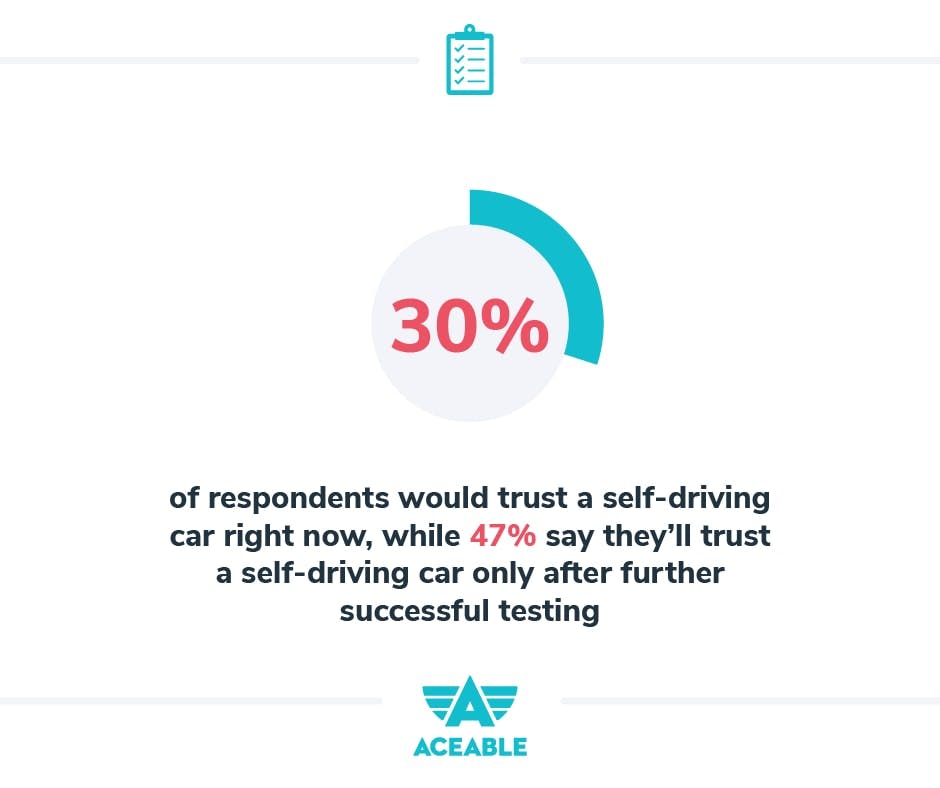
Earlier studies suggested growing openness to autonomous vehicles, but the reality is very different today:
Most drivers are uncomfortable riding in a fully autonomous vehicle.
Even fewer would trust a driverless rideshare, where maintenance and upkeep are outside their control.
Older drivers are significantly more skeptical than younger ones.
Women report higher levels of distrust than men.
For now, drivers overwhelmingly prefer a human behind the wheel.
Top Fears About Driverless Cars
Drivers consistently cite the same concerns about driverless vehicles:
 1. Technology failures
Safety features fail more often than people realize, and when they do, drivers must quickly take over. This remains one of the biggest sources of fear around autonomy.
➡️ If you want to better understand the different levels of automation and what today’s systems can and can’t do, explore our breakdown of modern autonomous driving technologyAutonomous Driving Technology Horizon Blog article.
2. Hacking
Cybersecurity remains a top concern as vehicles become increasingly connected.
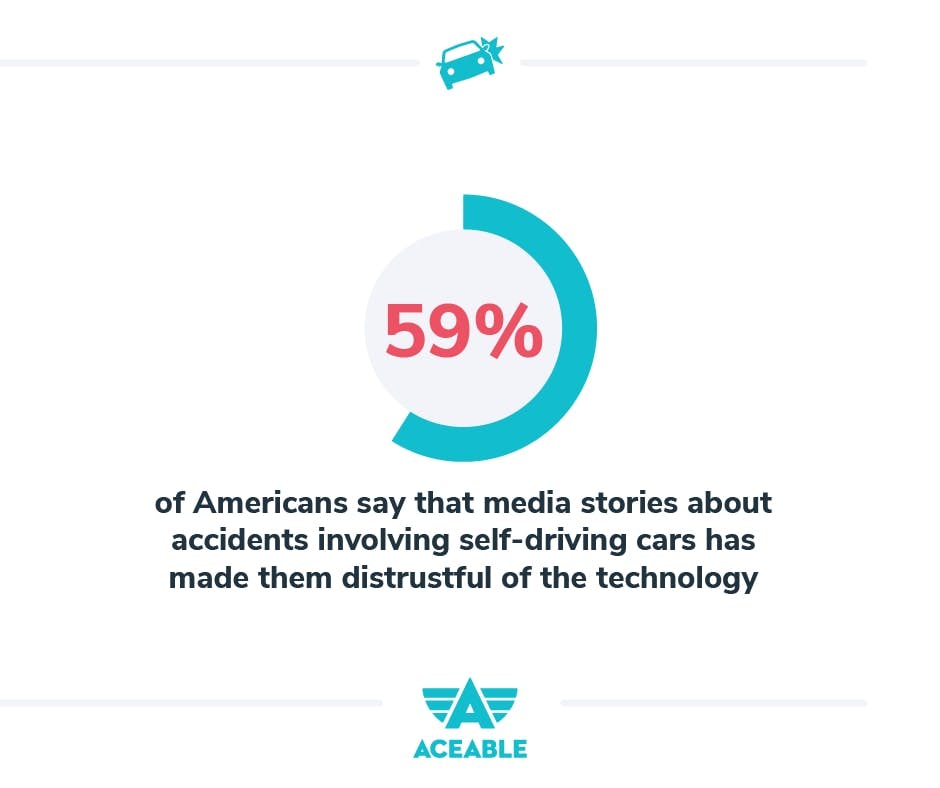
3. Media coverage of crashes
Stories about self-driving car accidents strongly influence public perception — especially for drivers over 40.
4. Loss of control
Many drivers are uncomfortable with machines making split-second judgment calls in real-world environments.
The Hidden Truth: Humans Are Still the Biggest Risk
Before concluding that robots are too dangerous, remember this:
Human error causes millions of crashes every year.
10,000+ deaths annually are caused by drunk driving.
Distracted driving is still rampant:
88% check their phones at stoplights
69% check in traffic
63% check even while moving slowly
Autonomous technology could help reduce these risks.
But we’re simply not there yet.
So What Should Drivers Do Now? (Actionable Takeaways)
Here’s how drivers can protect themselves today — while tech continues evolving.
1. Treat Safety Features as Backups, Never the Driver
Drivers overwhelmingly agree that safety features make driving easier, but they don’t replace human skills.
Make this your rule:
If the tech shut off right now, could I safely handle the situation?
If not, you’re relying on it too heavily.
2. Practice “Tech-Aware Driving”
Whether you drive a basic sedan or a feature-packed SUV:
Know what features your car has — and what it doesn’t.
Keep practicing manual skills like blind-spot checks and lane changes.
Understand what your sensors can and cannot detect.
Expect occasional malfunctions — they happen more often than people think.
3. Refresh Your Foundational Driving Skills
Survey data shows:
93% of drivers still use skills learned in driver’s ed.
91% believe foundational techniques make them safer in vehicles with modern features.
A defensive driving refresher helps you adapt to tech failures, unpredictable human drivers, and challenging road conditions.
4. Prepare for Mixed Roads: Humans + Machines
For the next decade, we won’t have fully autonomous highways. Instead, we’ll drive in a hybrid environment with:
Fully human-driven cars
Vehicles with partial automation
Occasional test-level autonomous cars
This mix is more complex and more dangerous than either scenario alone.
Drivers must be prepared for:
Unexpected autonomous-vehicle behavior
Sensor or system failures
Other drivers are relying too heavily on their tech
Weather that disrupts lane-keeping or detection systems
5. Stay Informed, Technology Changes Fast
Being a safe driver today means:
Knowing your car’s automation level
Keeping sensors clean and calibrated
Staying aware of recalls and system updates
Understanding how new software changes your feature behavior
You don’t have to be a tech expert — just an informed, attentive driver.
The Bottom Line: Driverless Cars Aren’t Ready So Drivers Must Be
Fully autonomous vehicles may arrive someday, but even companies poised to benefit say it’s still a long way off.
Until then, your skills — not your car’s software — are your best safety tool.
A defensive driving course is one of the most reliable ways to sharpen your skills, stay confident, and stay safe — no matter how fast technology evolves.
Skip The Classroom and Take Your Drivers Ed Course Online with Aceable!
Looking for more driving resources?
Enter your email for deals, study materials, car maintenance tips, insurance savings, and more.