
Protecting Your Car and Yourself from Storm Damage
“Neither snow nor rain nor heat nor gloom of night stays these couriers from the swift completion of their appointed rounds.”
Although a fitting tribute to our postal carriers, being out and about in all sorts of adverse weather conditions is not good advice for most of us — or the vehicles we drive. Fortunately, there are things we all can do to mitigate the damage that can result from driving in stormy weatherProtecting Your Car And Yourself Storm Damage Blog.
Regional Storm Damage
With the occasional notable exception, weather conditions tend to be more commonplace in one region of the country over another. For example, measurable snow and ice are expected yearly events in Colorado, but it’s headline news when so much as a single snowflake falls on the Florida panhandle.
Every driver needs to be aware of the adverse weather conditions they are most likely to face and prepare their vehicles and themselves for those inevitable encounters.
Snow and Ice
Not surprisingly, our northern states deal with snow the most, with Vermont being the overachiever while accumulating more than seven feet of snow per year on average. But because it is so sparsely populated, Vermont does not make the top five list of deadliest states for winter driving. That “honor” goes to Michigan, Pennsylvania, New York, Ohio, and Illinois.
Preventing Snow and Ice Storm Damage
Here are some storm damage prevention tips you should consider.
Slow down
Keep more distance between you and other vehicles
Use your headlights when visibility is an issue
Invest in snow tires and all-season windshield washer fluid
Wind
The plains states are generally the windiest. (Any old tumbleweed could have told you that!) The top five windiest states are Nebraska, Kansas, South Dakota, North Dakota, and Iowa. Other states might not make the list but can become rather windy at times or have certain areas where wind is more prevalent.
Is this simply fun wind trivia to impress your friends with, or does wind present a real danger while driving? The answer is “yes.” Dangerous wind speeds for high-profile vehicles are 30-45 mph and 40-58 mph for smaller models.
Preventing Windy Conditions Damage
When faced with significant wind conditions, consider the following:
Slow down
Keep more distance from other vehicles
Be aware of high-profile vehicles that can be blown around or toppled
Keep your hands on the steering wheel
Watch for objects blowing onto the roadway
Lightning and Hail — and Tornadoes!
Driving in thunderstorms with lightning and hail can be challenging and scary. While this weather condition can happen almost anywhere, it is more prevalent in these five states: Florida, Louisiana, Texas, Mississippi, and Oklahoma.
Preventing Lightning and Hail Storm Damage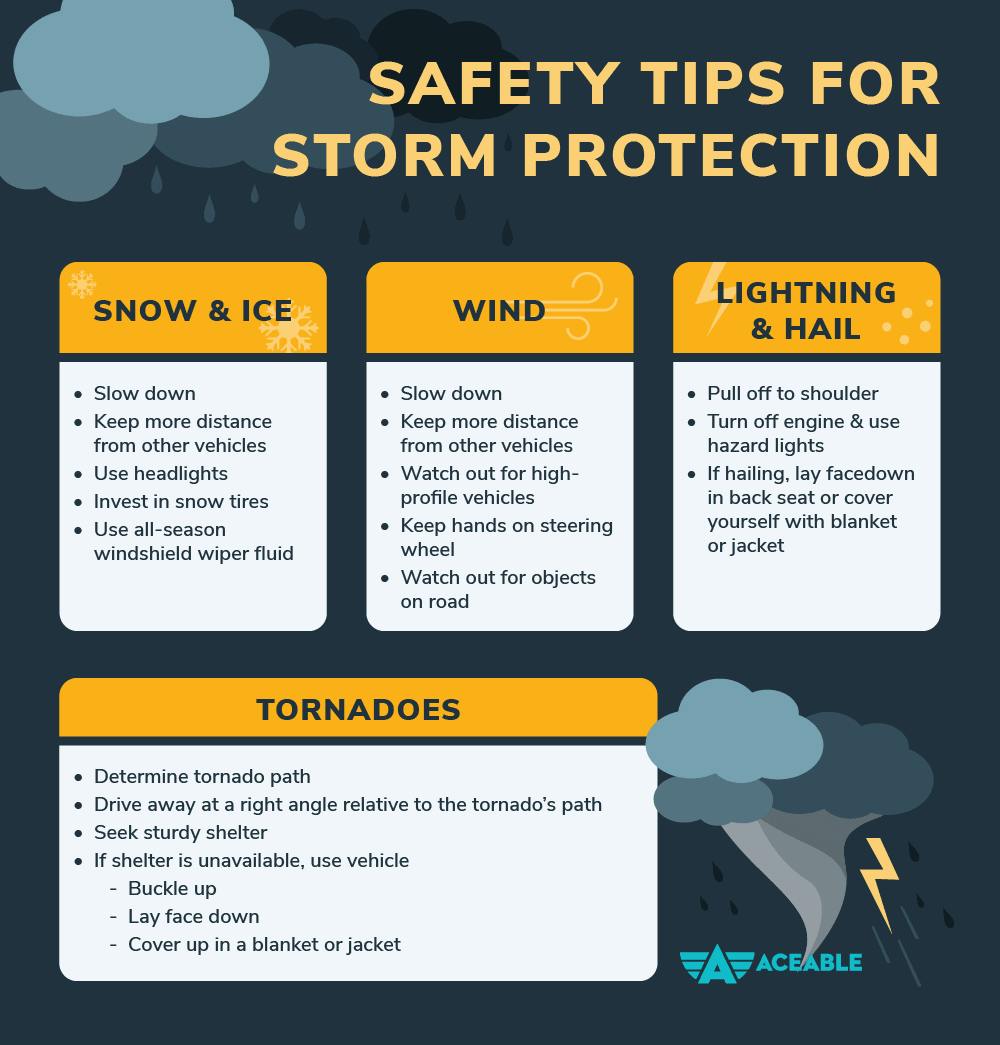
Since a typical thunderstorm will last around 30 minutes, your best bet to prevent lightning and hail storm damage is to wait it out. Don’t get into the car, to begin with. Stay inside and don’t drive. Park your vehicle in a protected area and chill.
But if you get caught on the road in a storm, here are some safety tips to consider:
If you can stop driving:
Pull off to the shoulder
Turn off your engine
Put on your hazard lights
If it’s hailingHow React When Youre Driving Through Hailstorm Blog:
Pull over immediately; driving increases speed and impact of hail
Lay in the back seat facedown if you can
Cover yourself with a blanket if you have one
If you have to continue driving
Avoid flooded roadways
Drive slowly
Use your lights
Preventing Tornado Damage and Injury
Perhaps the scariest weather-related scenario for a driver to encounter is a tornado. Where’s that most likely to happen? In the nine or so states that lie in an area unofficially known as “tornado alley,” which is a corridor-shaped region in the Midwest. The states most commonly associated with it are Texas, Oklahoma, Kansas, Nebraska, Indiana, Ohio, and Missouri. There is some thought that the corridor is shifting eastward a bit. Generally speaking, you’ll find them more often in the southern part of the U.S.
Here are some tips on what to do if you encounter a tornado while drivingHow Escape Tornado When Youre Driving Blog:
Determine tornado path
Drive away (if time permits) at a right angle relative to the tornado’s path
Seek shelter (think sturdy)
Hide in your vehicle (if you can’t get to shelter)
Buckle up
Lay face down
Cover up in a blanket if you have one
Reporting Storm Damage to Your Insurance
Storm damage to your vehicle will likely be covered under your auto insurance — if you have comprehensive and collision coverage and not just the state-mandated liability-to-others coverage.
Collision coverage insures your vehicle from damage from overturning or a collision with another vehicle or object. Comprehensive coverage insures your vehicle from non-collision damage and events like theft, hail, lightning, and falling trees.
Make the Claim
You can get the ball rolling by reaching out to your insurance company’s claims department. Their number should be prominently displayed on the insurance card you carry on your person or the paperwork you keep in your car.
Pro tip: Make that call as soon as possible and take pictures with your phone to record the damage right after the weather event.
Insuring Your Safety
Another form of great insurance against storm damage is to enroll in a defensive driving courseDefensive Driving through Aceable.com that will teach you important driving maneuvers and safety tips like those shared here. It can also save you 10% on your insurance with proof of completion!
Looking for more driving resources?
Enter your email for deals, study materials, car maintenance tips, insurance savings, and more.